
June 9, 2026
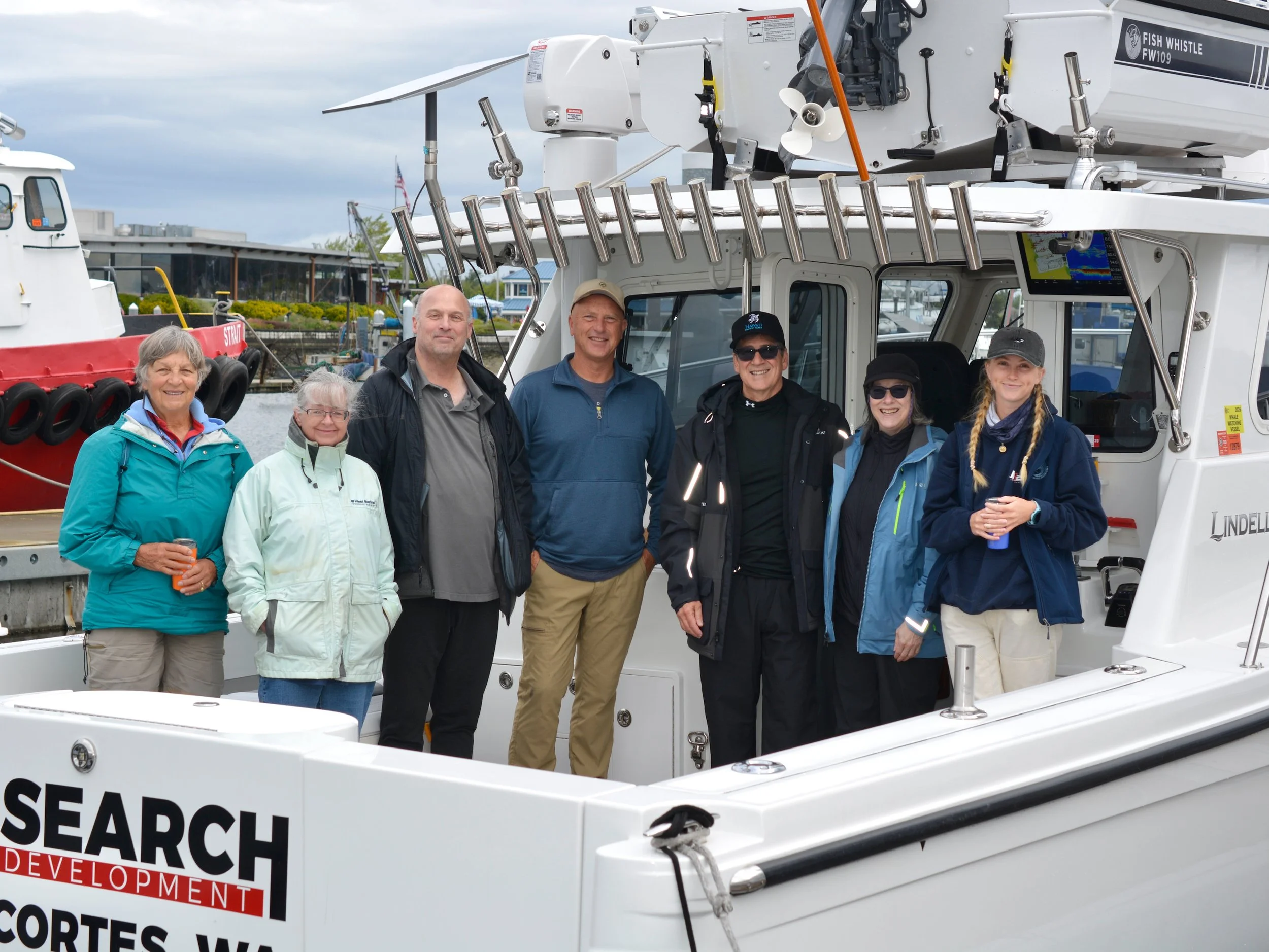
Anacortes Multi-Day Expedition
Highlights
Bigg's Killer Whales (T124As, T123s, T100s, T46Bs, T46B1s)
Humpback Whales (BCX1057 Divot and new calf, BCY1478, BCX2064)
Gray Whales
Three Minke Whales
Steller & California Sea Lions
Harbor Seals
Sea Otter
Tufted Puffins
Bald Eagles
Brown Pelicans
Mouflon Sheep
Black-Tailed Deer
Sea Stars
Tons of other sea birds!
June 9-11, 2026 | Multi-Day Whale Watch
Day 1
Our multi-day expedition is finally here! We spent our first day in good company with not one but two families of Bigg's killer whales.
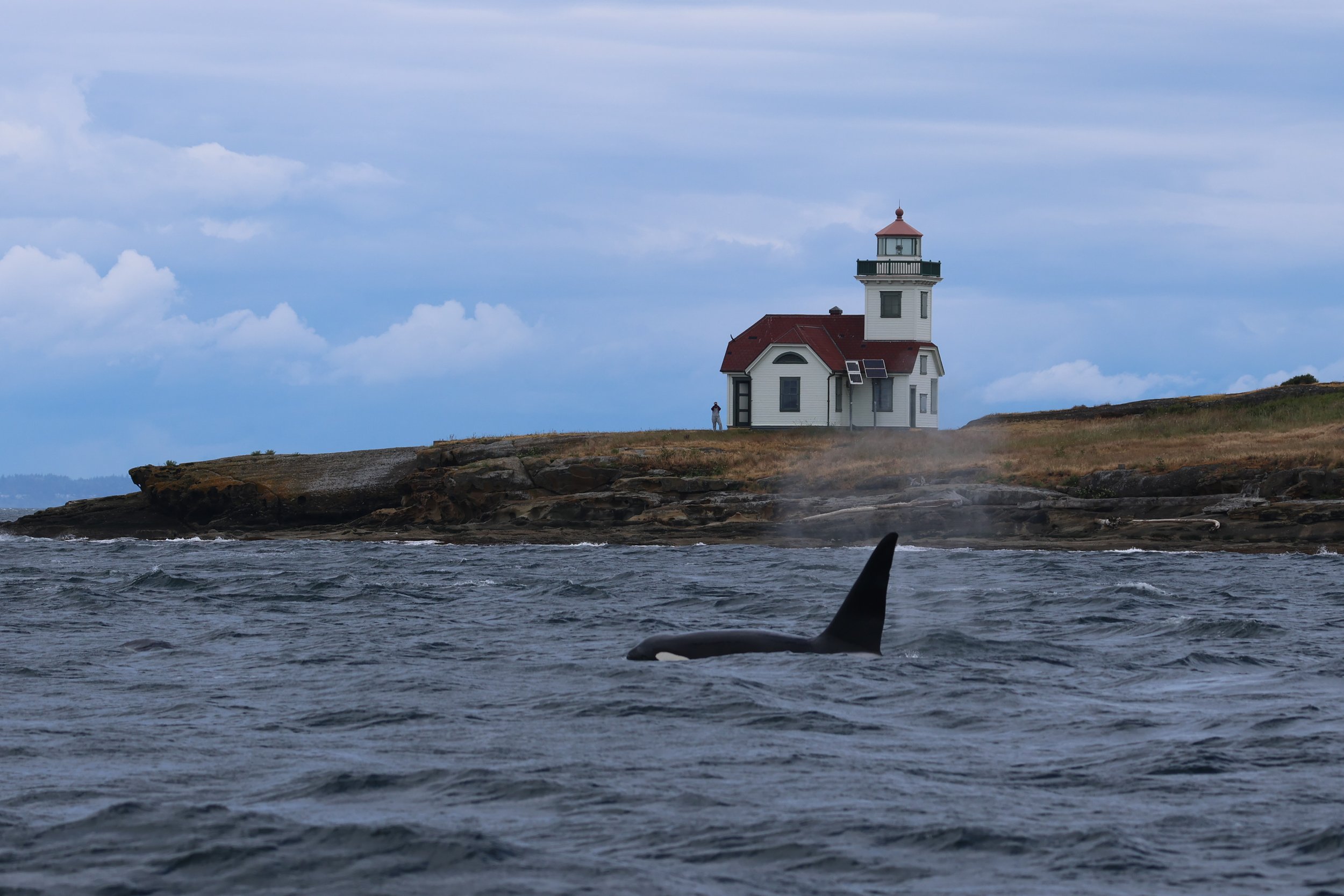
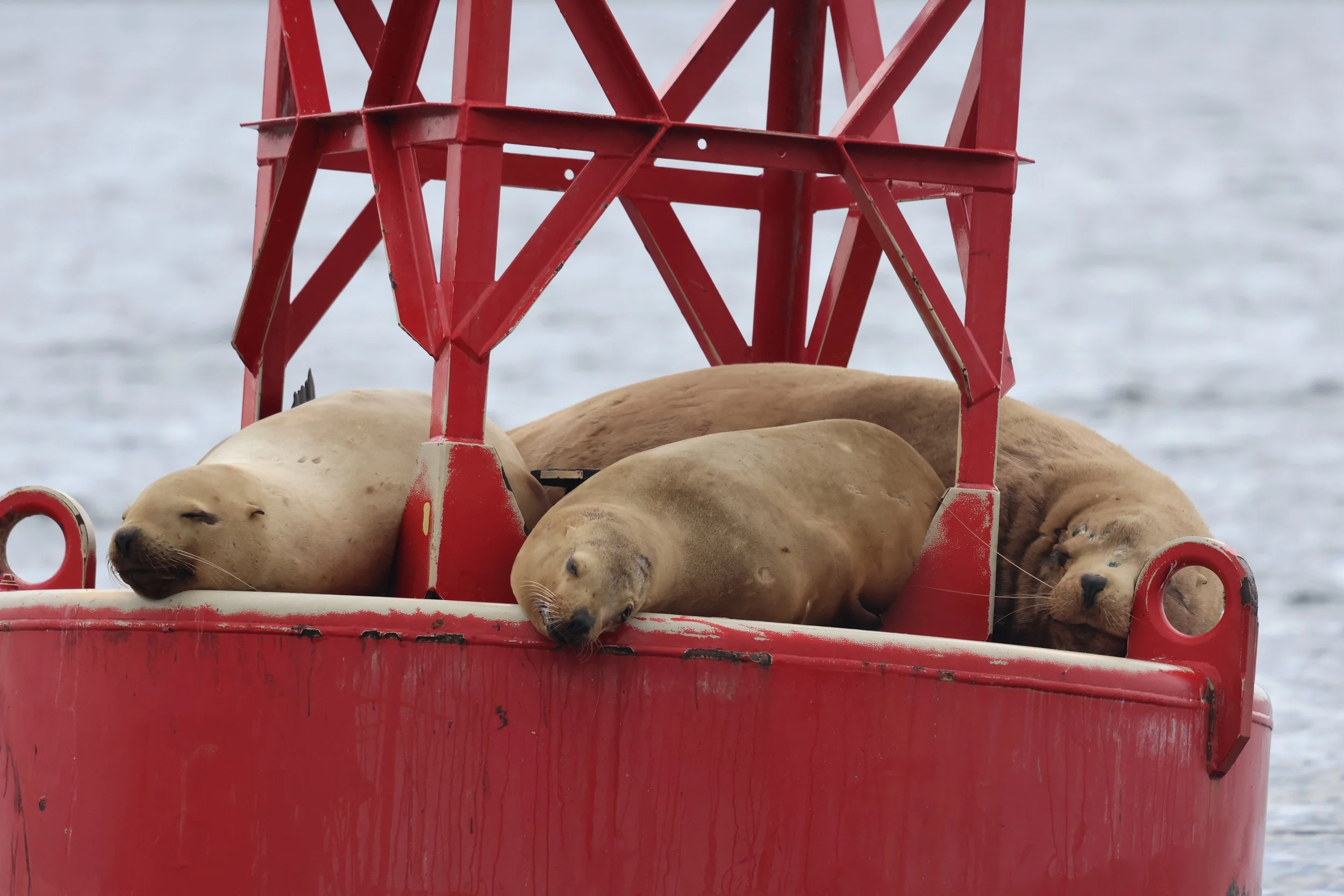
As we pushed off the dock, we decided to skirt north up the east side of Guemes Island to avoid some heavy winds coming in from the south. Along the Guemes shoreline, we spotted a purple sea star clinging to the exposed intertidal zone rocks, countless pigeon guillemots flitting back and forth against the cliffside, belted kingfishers clattering about, and three bald eagles perched high in the treetops. Rounding the top of Sinclair, we were able to get some gorgeous looks at a few snoozing sea lions piled up on a navigational marker as well.
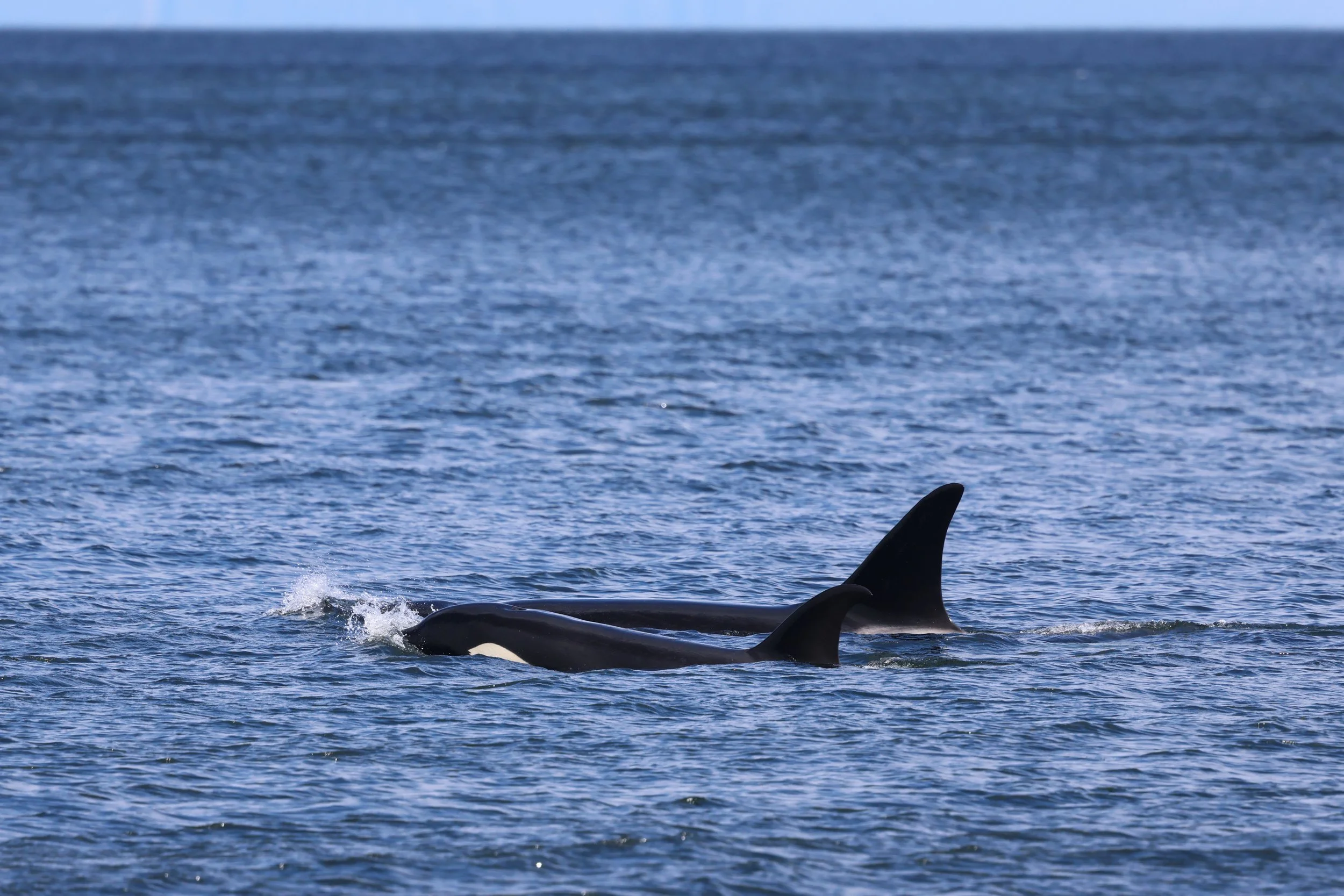
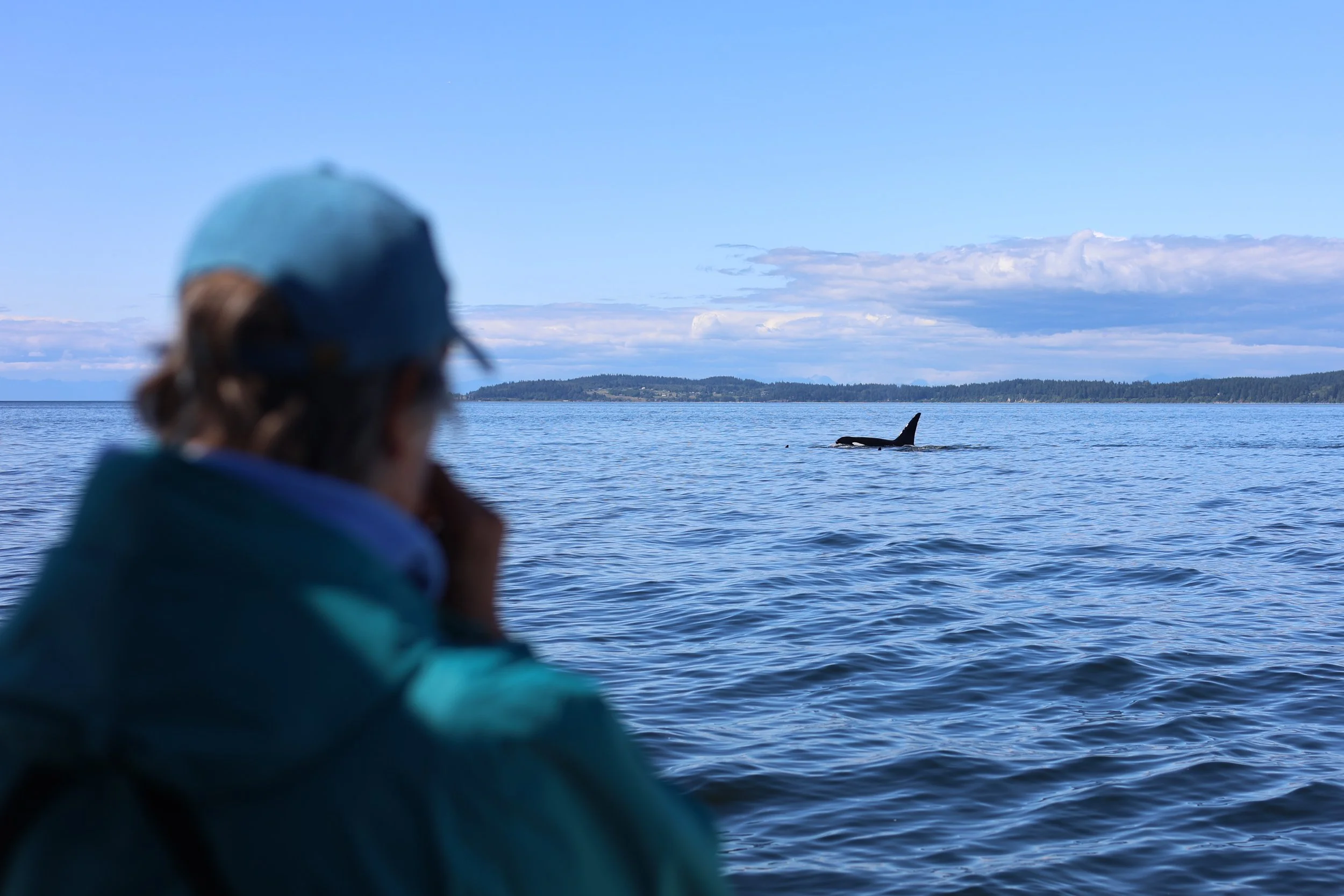
Continuing north, we approached the coastline of Orcas Island and got word of a few black dorsal fins that had been spotted in the area by a water taxi. Slowing down, we scanned hard for any movement. After a few minutes of searching, we came across a lovely trio of Bigg's killer whales. It took a few moments to ID this family, but after we'd gotten some dorsal fin shots we were able to determine that we were on scene with the T124As! T124A Kittiwake, mother and matriarch of this group, has a beautiful swirl in her saddle patch that makes her easy to identify. Traveling with her was her 10 year old son T124A6 Kasuun and her 5 year old daughter T124A7 Kite. This little family made their way in a zigzag formation towards Matia and Sucia.
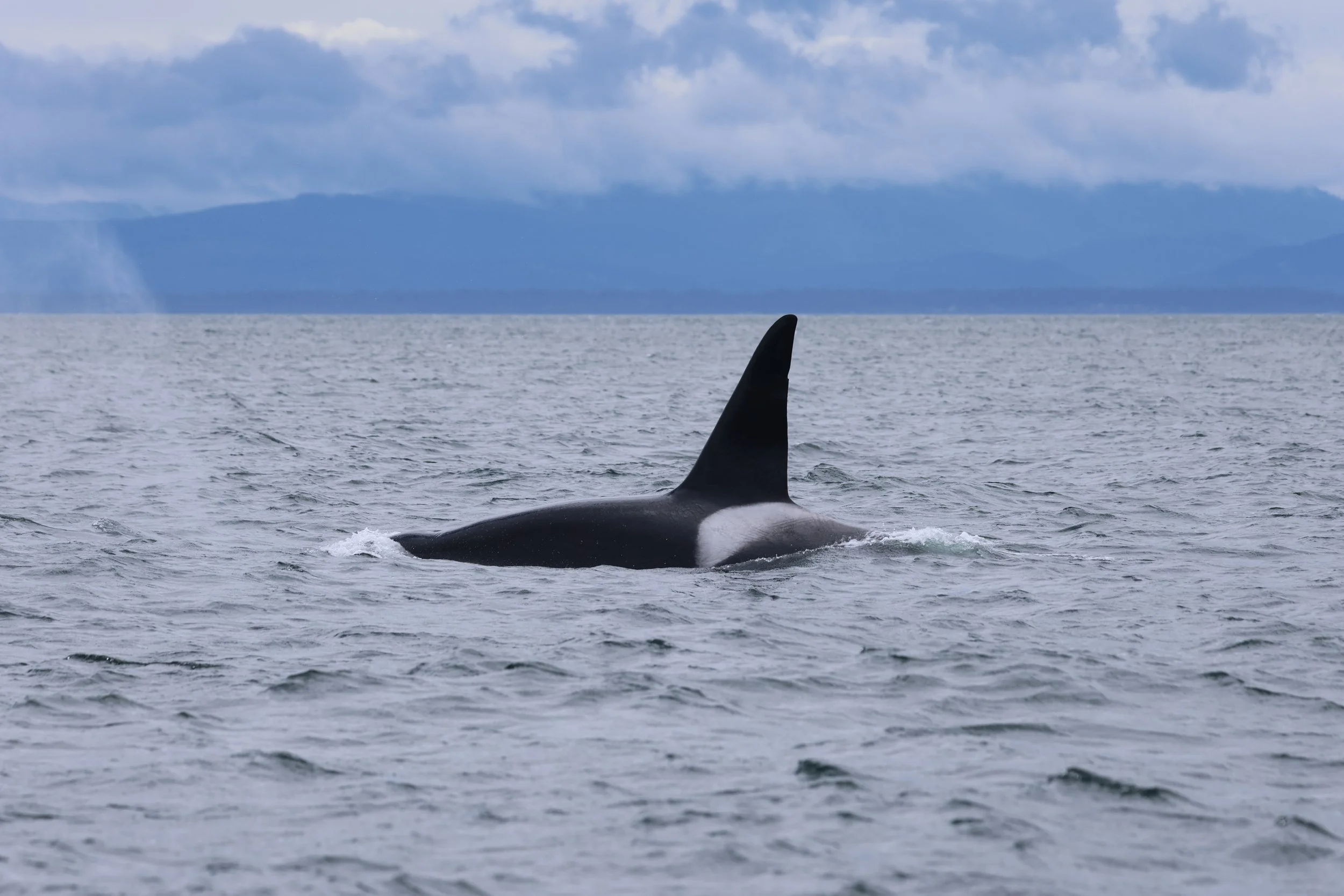
After we'd traveled with them to the outer island chain, we waved goodbye and decided to search waters to the west. However, shortly after we departed we got word of more killer whales that had met up with Kittiwake and her family. Making a small loop around Waldron Island, we angled back for Patos to reunite with Kittiwake and her crew. Immediately, we knew that some newcomers had arrived when the massive, wobbly dorsal fin of an adult male broke the surface. It turns out, the T123s had decided to get together with the T124As, and were now traveling in a tight knit group rolling around and socializing together. Leading with T123s was T123 Sydney, and of course traveling close to her side was her adult son, T123A Stanley as well as Stanley's little sisters, T123C Lucky and T123D Darcy. At 26 years old, Stanley's dorsal fin towered high above his company, and at one point he even turned his flukes skyward and we got to see their impressive curve. After hanging with this group of seven as they traveled towards Blaine, we waved goodbye and tucked into Matia Island for a little walk and a lasagne caesar salad lunch in the sunshine! After our Matia pitstop we cruised back towards Rosario Strait, then passed through Peavine and pointed for Fishermans Bay. Once we arrived to Lopez Island, we got settled in and grabbed dinner in the Lopez Village. It was such a phenomenal first day and we can't wait to see what tomorrow has in store!
Day 2
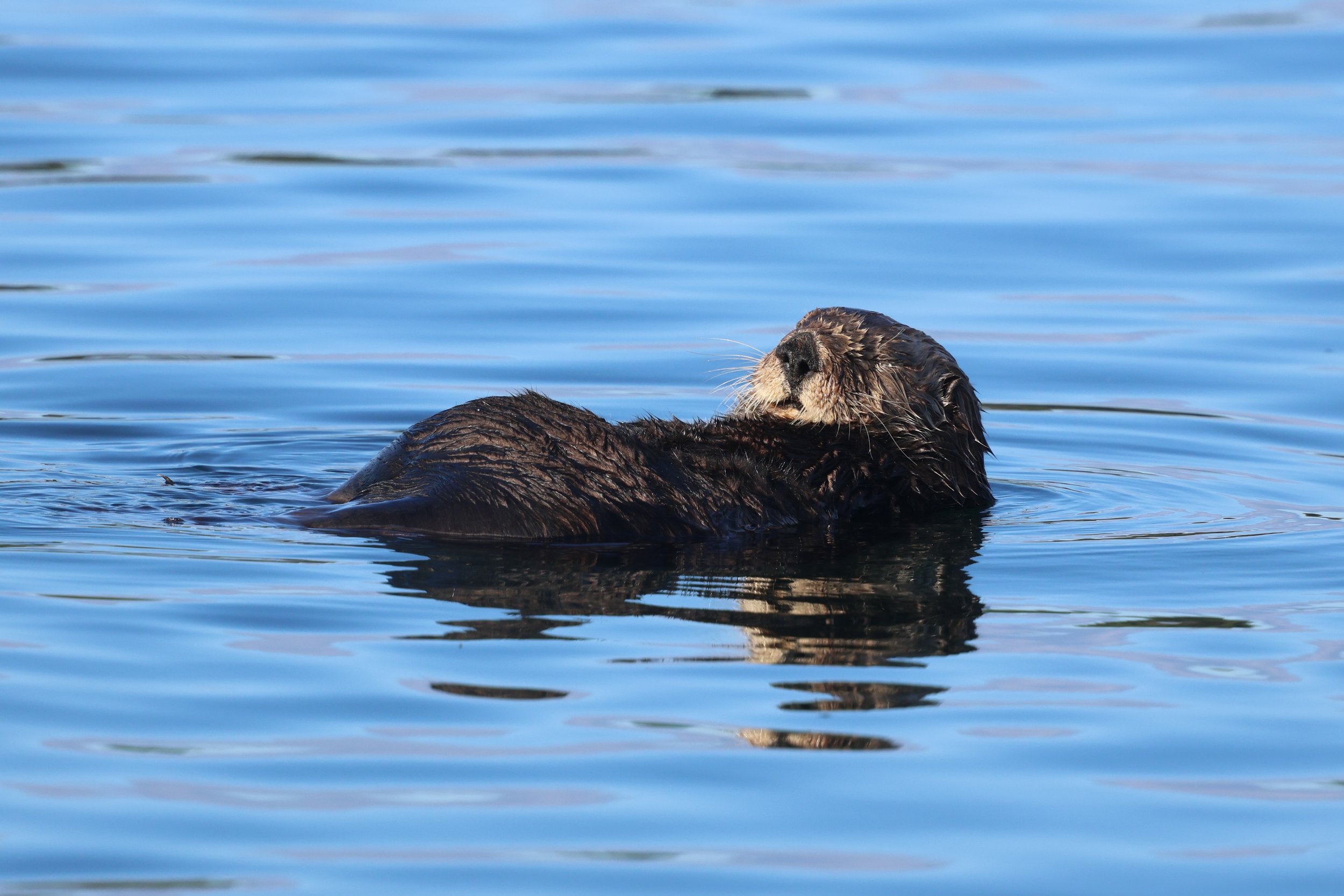
Wow wow wow!!! Such an amazing day for biodiversity! We departed from Lopez Island early this morning, spotting a bald eagle and a king fisher both using channel markers as perches as well as a family of Canada Geese crossing the channel in a nice orderly line. We then cruised down to Whale Rocks to hang out with a rowdy crowd of Steller sea lions in the most beautiful morning light. We also investigated Goose Rock where we spotted double crested, brants, and pelagic cormorants, as well as lots of glaucous-wing gulls. Further north in San Juan channel, we spotted a sea otter twirling around at Turn Rock and got some fantastic looks. On top of the marker at Turn rock, a bald eagle kept watch over the kelp beds. Along the shoreline of San Juan, we also spotted a black-tailed deer peeking out of the madrona trees. Making our way up to Speiden, we spotted herds of mouflon sheep and several bald eagles perched in the trees and crouched down in the grasses along the bare bluffs. We also saw another family of Canada geese nestled along the coastline. After our splendid morning, we turned into Roche Harbor to have breakfast at Lime Kiln Cafe. Of course, we couldn't resist getting some of the cafe's famous donuts, which we snacked on throughout the day while hanging with more whales. (Freshly made donuts and whales... could anything be better?)
Getting back off the dock, we got reports of two humpback whales off the shoreline of Henry Island, just to the west of us. Cruising over to check it out, we soon got on scene with what turned out to be a mom calf pair-- my first of the season!! We had a fantastic look at this duo as they skipped up the coast of Henry and were so excited to get to welcome this calf to the Salish Sea. Mom was giving us some beautiful dives but not fluking, so we could't get a proper ID shot. However once off scene, we compared photos of mom's dorsal fin to photos from Happywhale and were able to figure out that this humpback was the famous BCX1057 Divot!
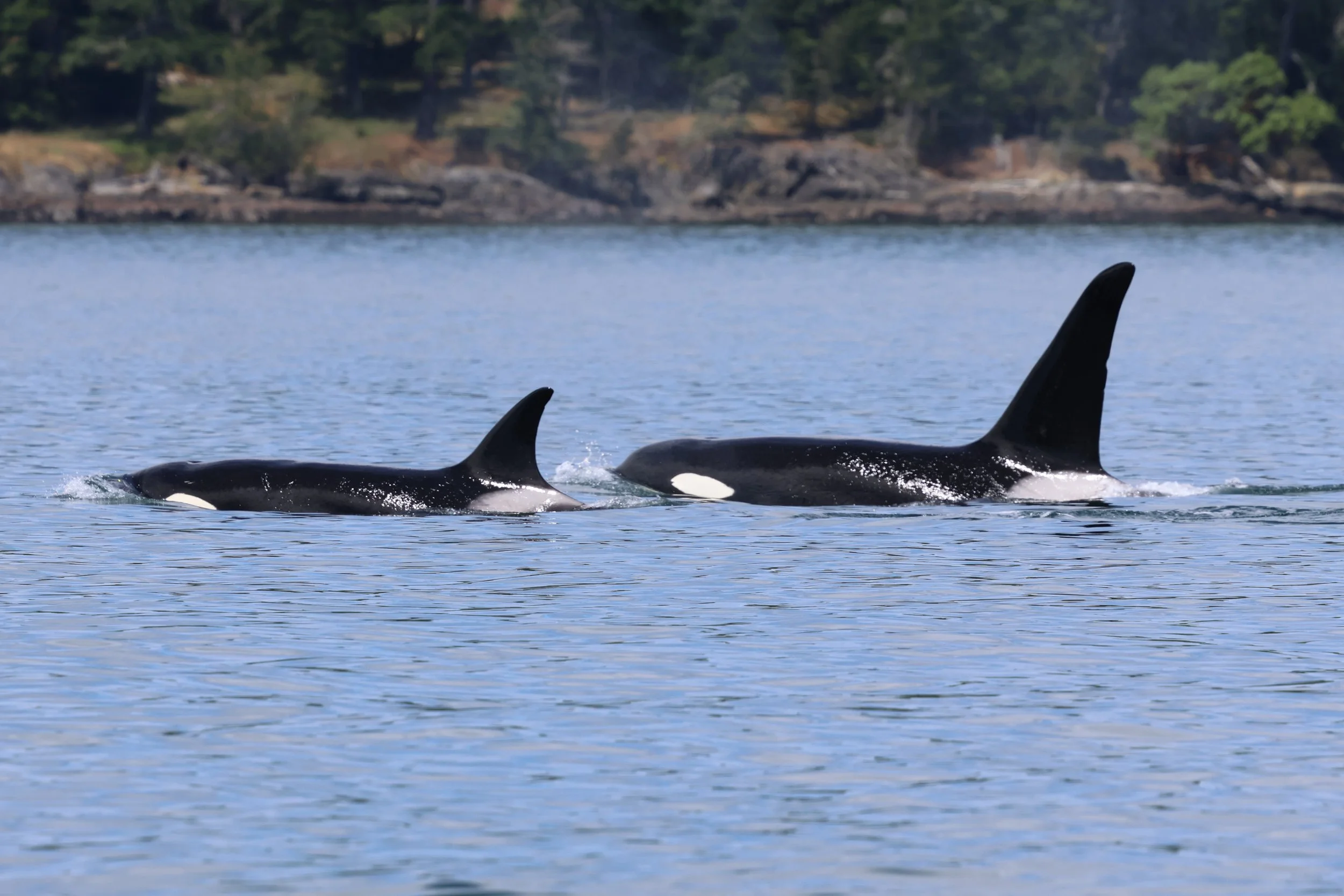
Cruising back down San Juan Channel, we followed up on reports of three Bigg's killer whales seen near Shaw Island. Once on scene, we confirmed these were the T100s, led by T100 Hutchins. Traveling with her was her son, T100C Laurel born in 2002 and her daughter, T100F Estrella born in 2014. This trio eventually led us all the way down to another group of Bigg's, the T46Bs! Immediately once on scene, we recognized T46B2 Akela traveling with her daughter T46B2B Takaya. Swimming with Akela was her mother (and matriarch of the group) T46B Raksha, as well as Raksha's two youngest, T46B7 Tala and T46B8. Takaya and Tala, two three year olds, and T46B8, born just a few months ago, meant Akela and Raksha were on some serious babysitting duty. They seemed to have their kiddos wrangled though, as all five traveled in a nice tight group. Other members of Raksha's pod were off in the distance, spread throughout San Juan Channel. With gorgeous lighting and calm water, the encounter was just about perfect.
After visiting with Raksha's crew, we cruised over to James Island to break out the BBQ and have lunch (burgers, yum!) at the state park dock. We had a little time to explore the island in the sunshine as well. Another bald eagle kept an eye on us as we ate and debriefed our humpback encounter earlier in the day, highlighting Divot's very famous mother, Big Mama, and the humpback recovery that has taken place in the Salish Sea over the last three decades.
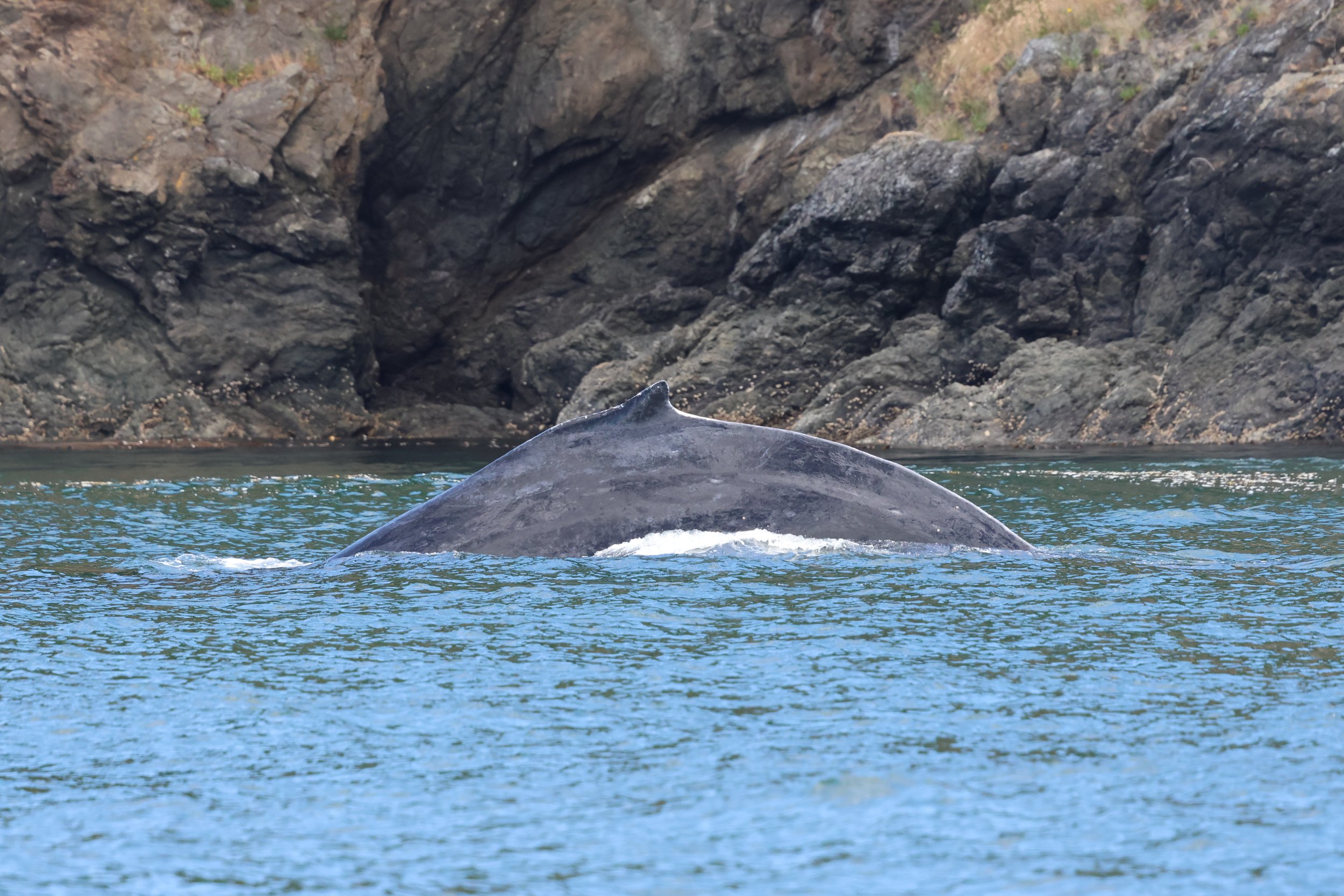
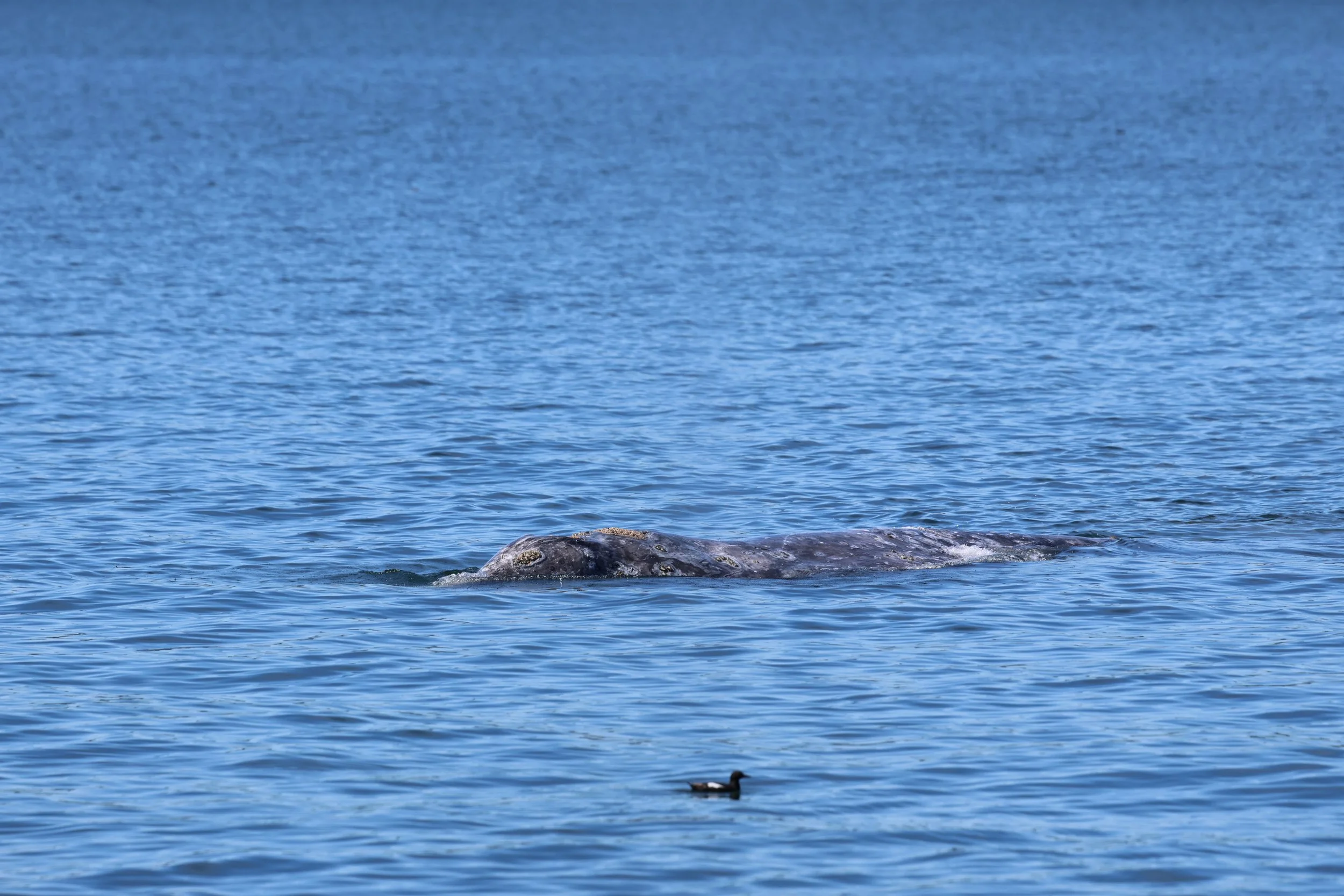
But the fun wasn't over yet. After lunch we zipped over to Bellingham Channel to view a gray whale, our third whale species of the expedition! We got a great look at this whale as it traveled slowly south, and even got a beautiful sounding dive. Just a little ways to the north, we then met up with the T123's. T123 Sydney led the way with her three kiddos (T123A Stanley, T123C lucky, and T123D Darcy) as they rounded the northern corner of Sinclair. We noticed on the navigational marker nearby, four Steller sea lions sat up nervously, watching the black dorsal fins approach. All of the sudden, one of these sea lions slipped off and into the water, creating a total commotion. Horrible timing, as the T123 family had just gone down on a deep dive pointing directly at the marker. The sea lion frantically swam around the can growling and looking for any place to hop up, but it's friends were not too keen to scoot over. (rude!) Eventually, this sea lion finally made the jump up and stuck the landing as Sydney and her crew popped up about a hundred yards away on the other side of the marker, having swam almost directly underneath it. I'm sure they heard the scramble but decided a hunt wasn't worth their while. After looking back at our photos, we realized that the sea lion that fell off the marker was an individual we've affectionately nicknamed Sharkbait, as it has a noticeable healing scar from what looks like a white shark bite on its back. First a shark attack, now falling off a nav marker as a family of Bigg's swim by... you gotta be more careful dude! Luckily, Sharkbait lives to swim another day. After ending the afternoon with this stunning encounter, we made our way back to Lopez Island for dinner and a beautiful island sunset.
Stunning conditions, warm sunshine, calm water, and rich biodiversity made this day one I won't soon forget! We can't wait to see what tomorrow brings us!
Day 3
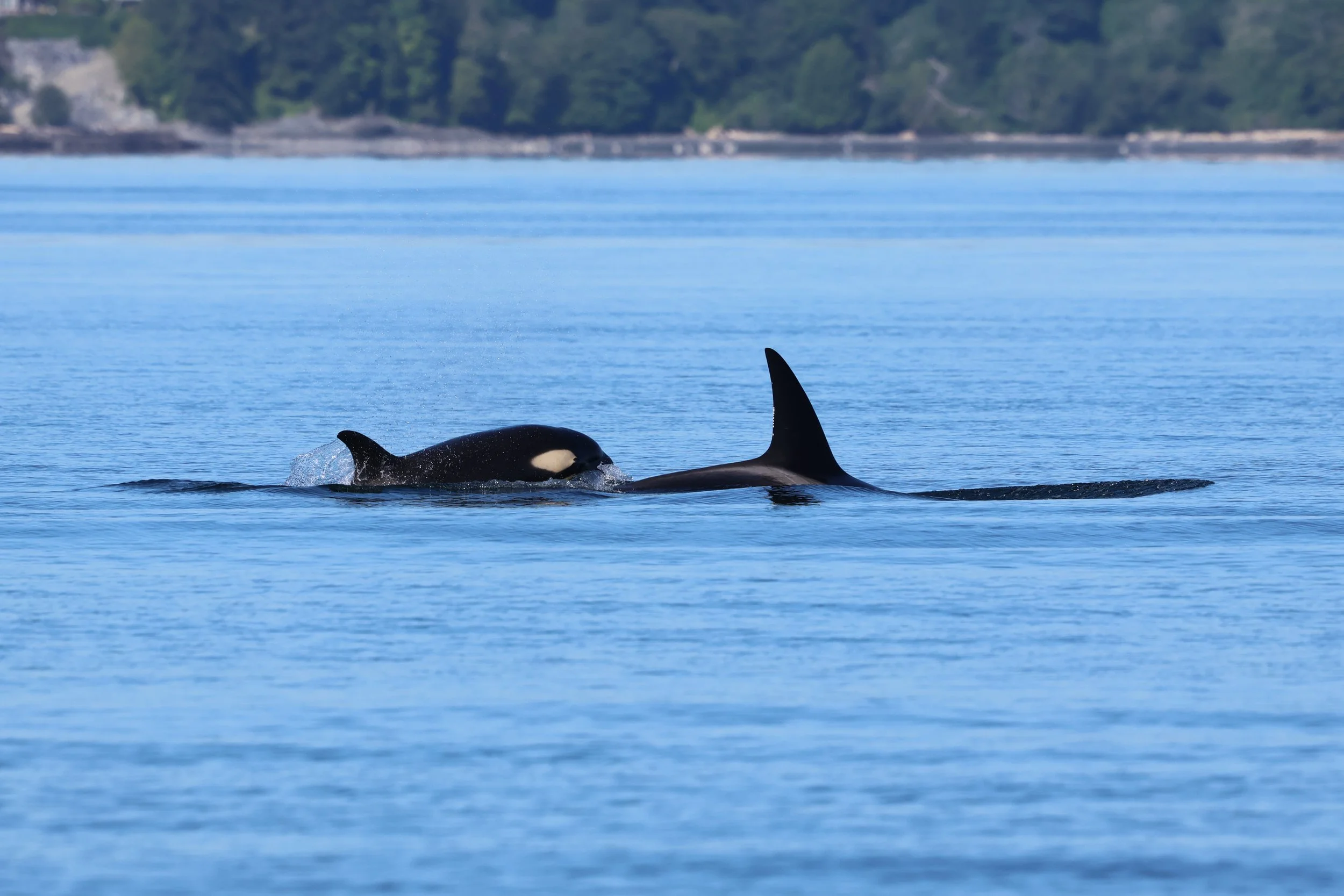
All four whale species in one day!! We couldn't ask for a better day on the water for the last leg of our multi-day expedition. After having breakfast at the dock, we began our day cruising down to Cattle pass before dipping out into a flat calm Strait of Juan de Fuca. Towards Vancouver Island, we spotted a few jet black dorsal fins cutting through the vivid blue morning light. These Bigg's turned out to be the T46B1's, so we got to meet more of the T46B family! Yesterday, we got to hang out with T46B Raksha and her younger kiddos, but the T46B1 family is led by Tread, Raksha's oldest and independent daughter. Tread leads a family of three. Her oldest, T46B1A Tsakani, as well as visiting cousin T46C2 Sam, hung out together off in the distance. Closer to us, Tread swam along with her three year old T46B1C Tide and her newest, T46B1D, born in 2025. After spending a few gorgeous surface intervals with this group, we decided to peel off and point for Race Rocks.
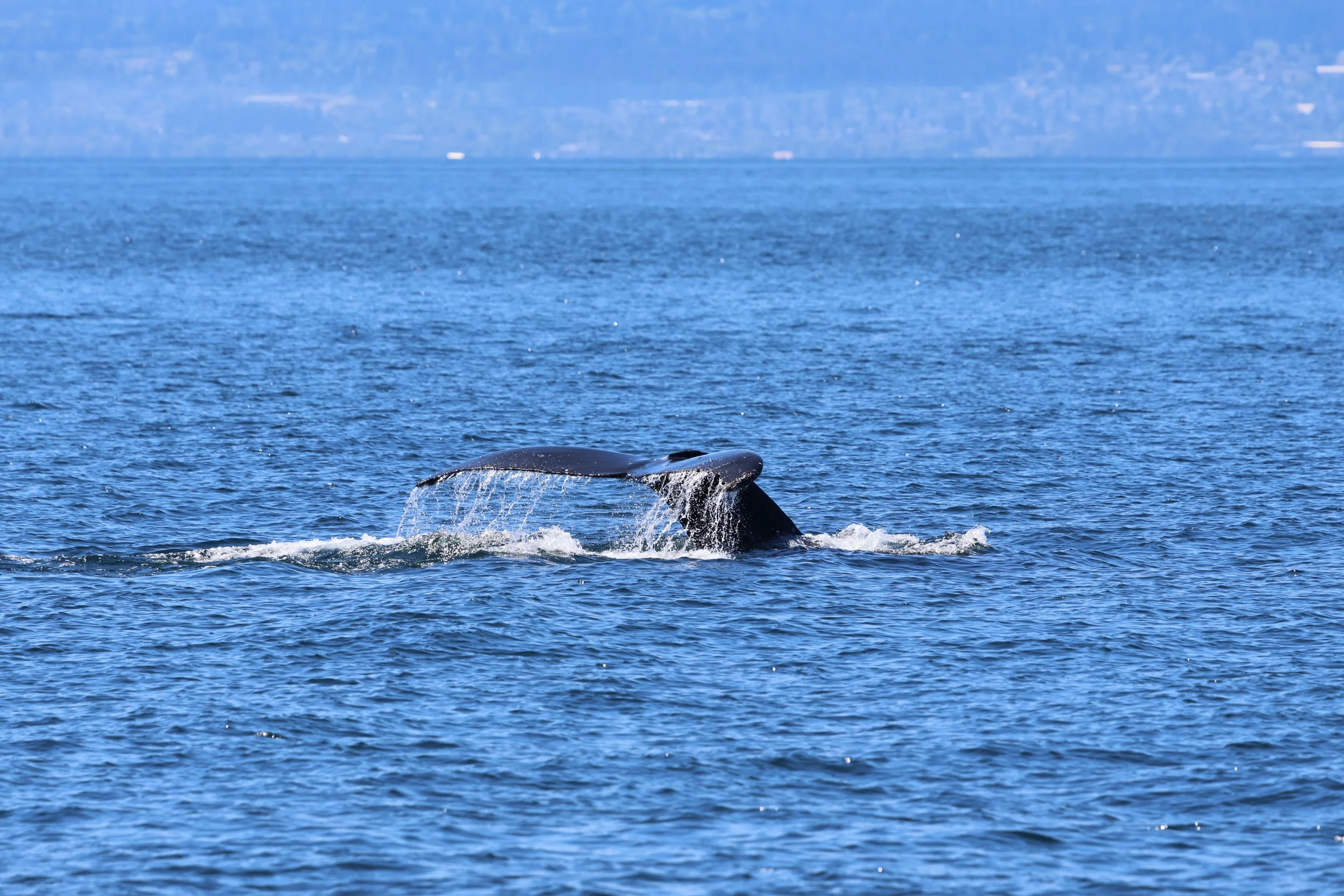
Here, we spotted several humpback whales feeding on a pinnacle, including BCY1478 and BCX2064. These whales circled in the area, surfacing here, then there, and everywhere before arching into gorgeous sounding dives. Cruising around the Race Rocks lighthouse, we also got a gorgeous look at a few California sea lions. After our humpback and sea lion visit we dipped into Pedder Bay for a floating lunch on the boat. The protected bay and warm sunshine made for a heavenly pit stop.
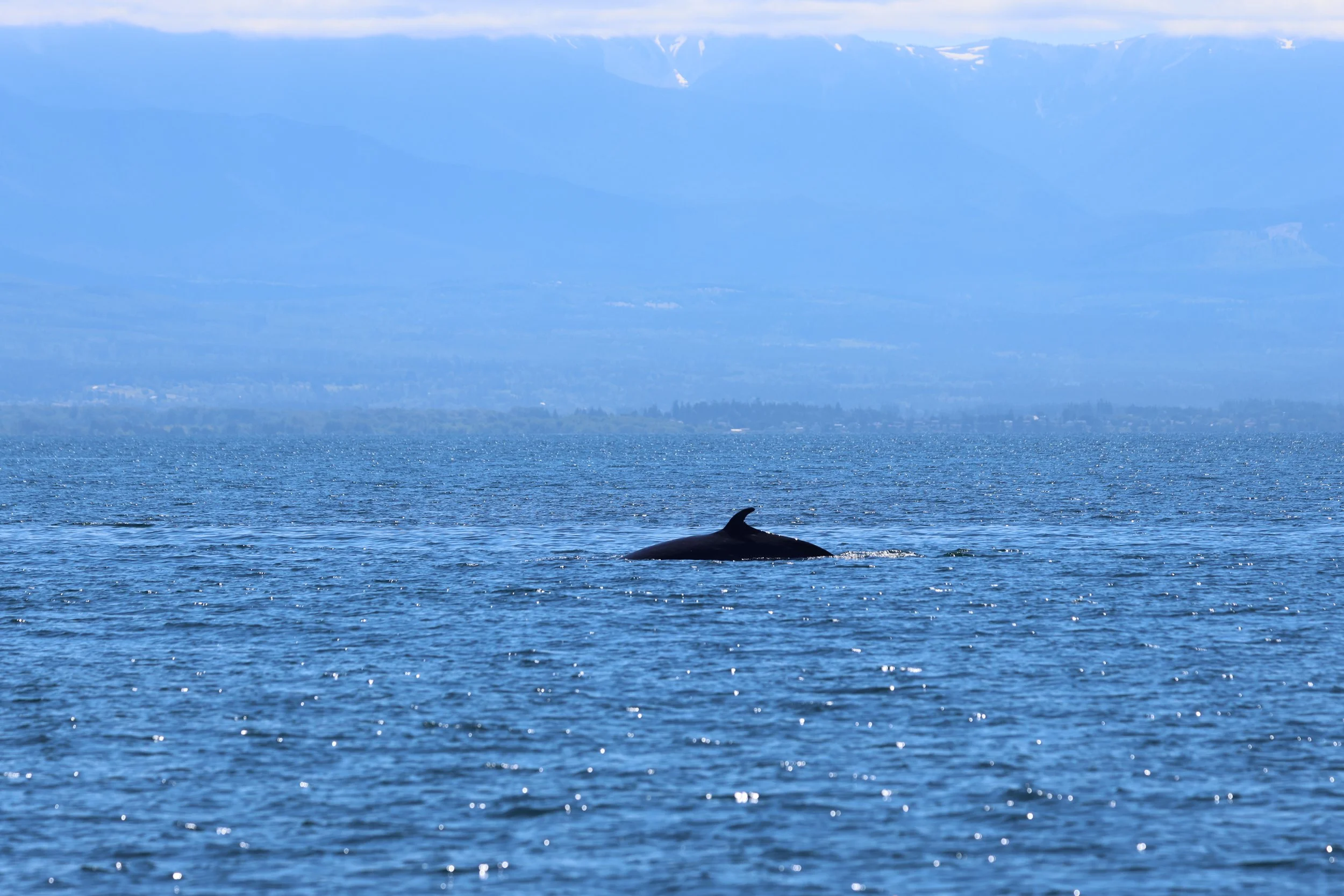
On the move again, we aimed back to the east, searching Hein bank for minke whales. After no luck, we moved onto eastern, where we spotted not one, not two, but three minke whales feeding! These whales moved fast as they cut through the placid surface but we were still able to get some great looks. Nearby bait balls attracted hoards of gulls, rhinoceros auklets, and cormorants and we marveled at the squawking frenzies. Pushing off once again after lots of time with our minkes, we angled for Smith Island. Here, we spotted two brown pelicans and, just on the outside of the kelp forests surrounding Smith, two tufted puffins! While enjoying these puffins' company, we also broke out some Lopez Island Creamery ice cream to enjoy. All throughout our journey across the strait, Rainier shot up tall and clear in the distance, her white peaks shining in the sunshine.
Tipping back north, we made one last stop along Lopez Island to visit with a feeding gray whale. A few pigeon guillemots flitted about in the bay, and chattering kingfishers could be heard from the trees and along the shoreline. We soaked up the last of our adventure as we crossed Rosario Strait and cruised back into Guemes Channel. It's such a special day when we get to see all four of our most common whale species in one day, and to top it off we got so much other wildlife as well. These last three days were truly perfect, and we can't wait for our expedition in September. Looking to join? We've only got 5 spots left for this next expedition. Book now and experience the Salish Sea like never before!
- Amy
Interested in experiencing our tours?
Island Adventures Whale Watching provides the best opportunity to explore the Salish Sea and the wildlife beneath the waves.
If you’ve been on other tours, you’ll appreciate the Island Adventures difference.