
May 17, 2026
Anacortes Whale Watch
Highlights
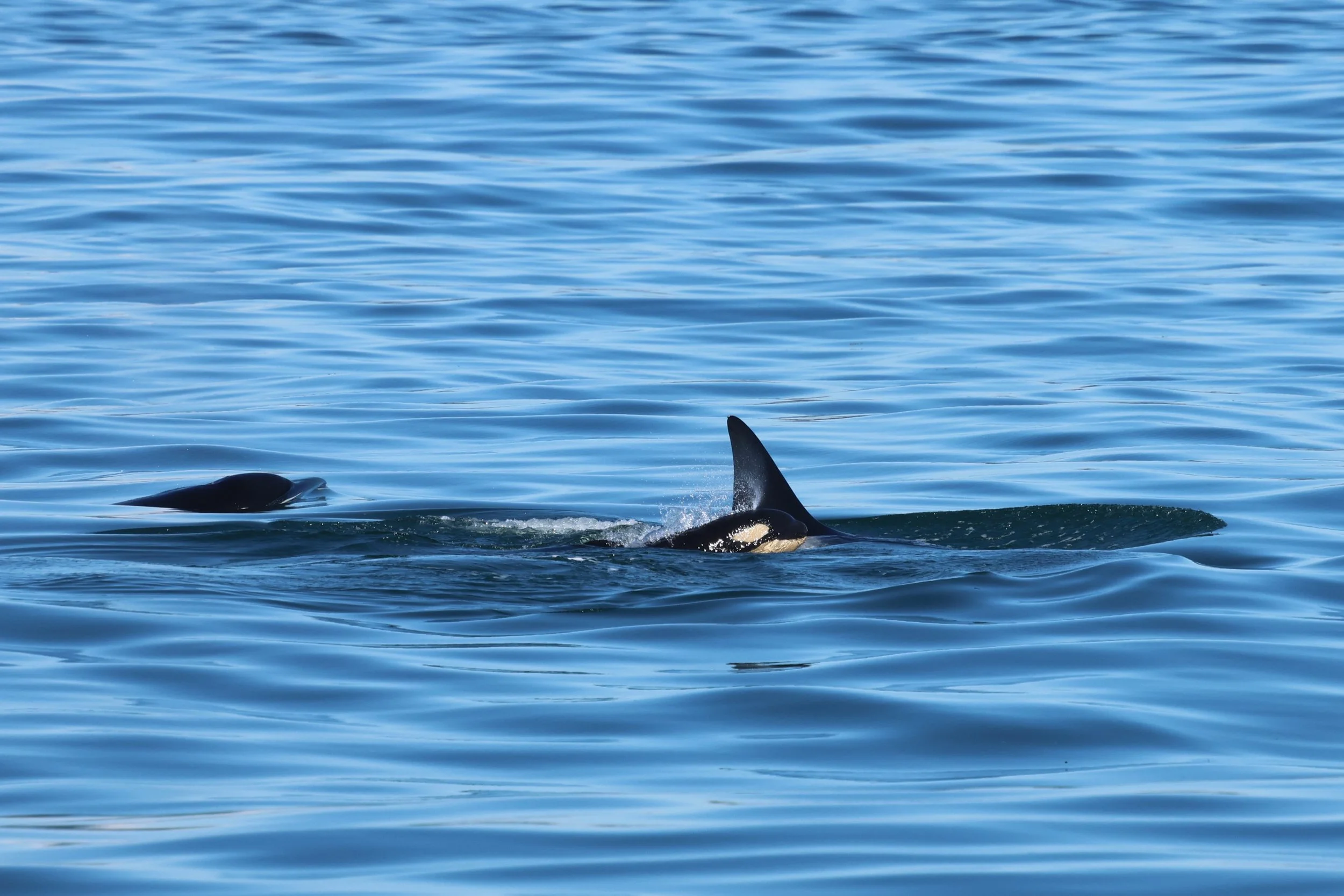
Bigg's Killer whales: T65As, T64Bs, T124A2s, T124A1
Gray Whale
Harbor Porpoises
Harbor Seals
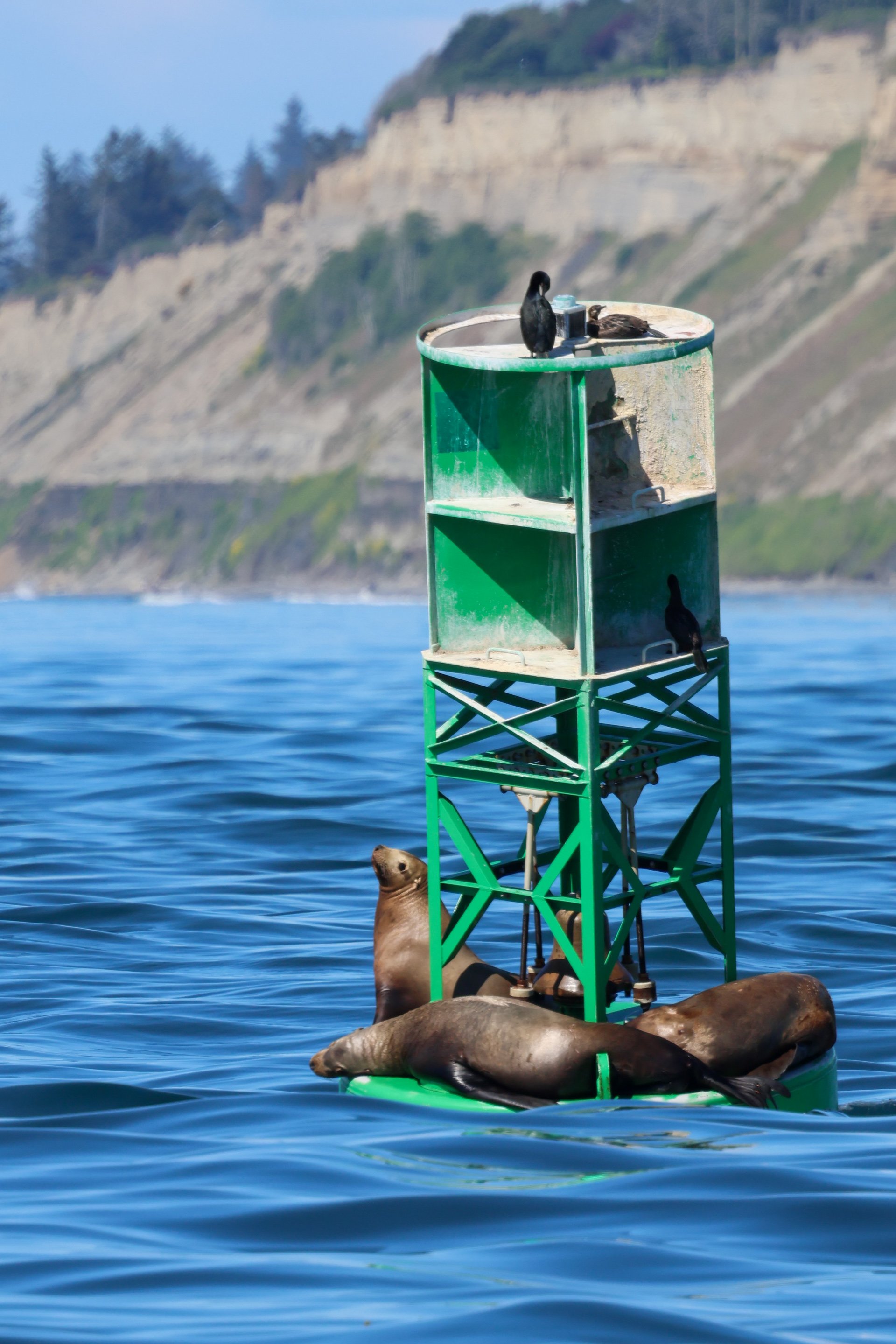
Steller Sea Lions
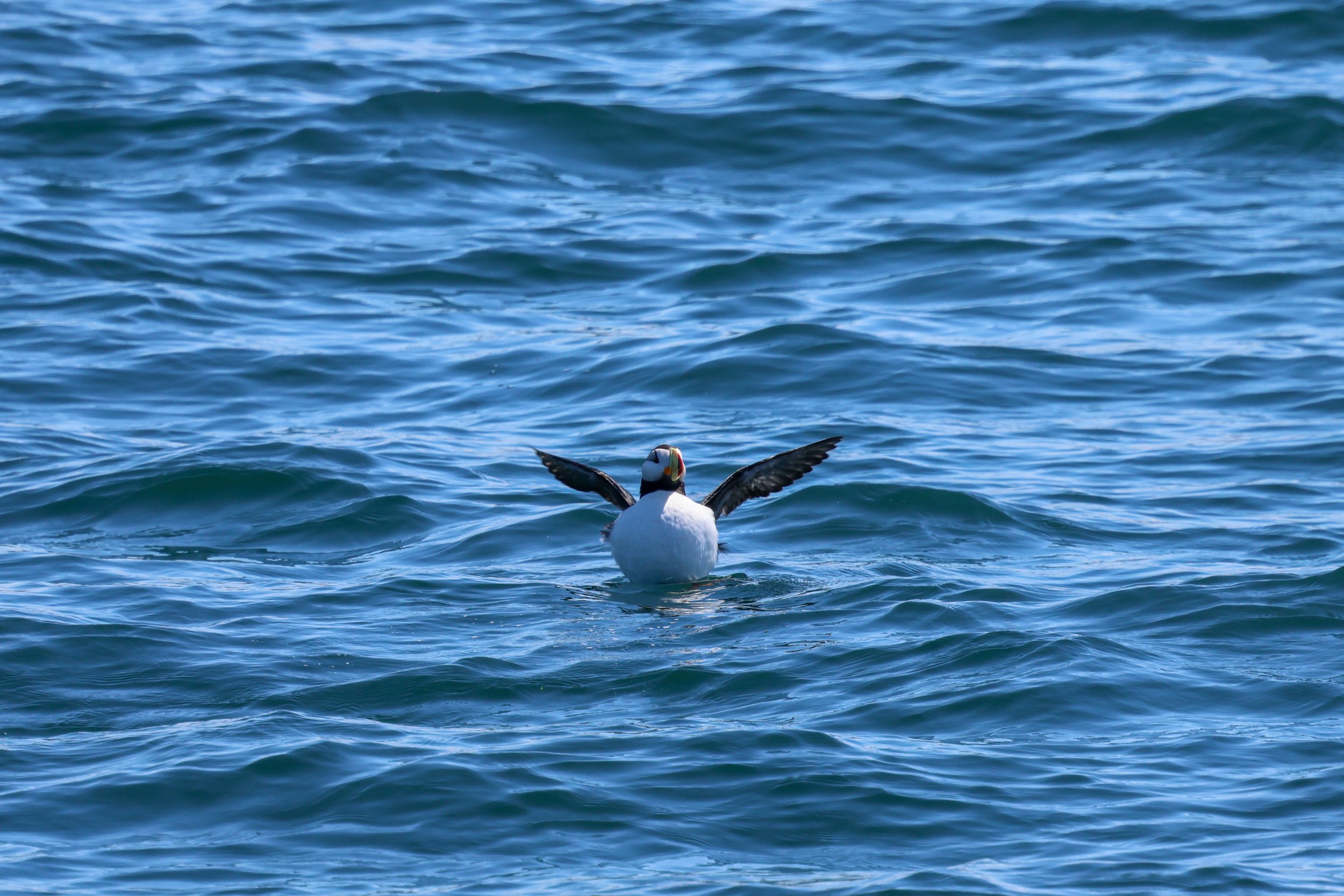
Tufted & Horned Puffin
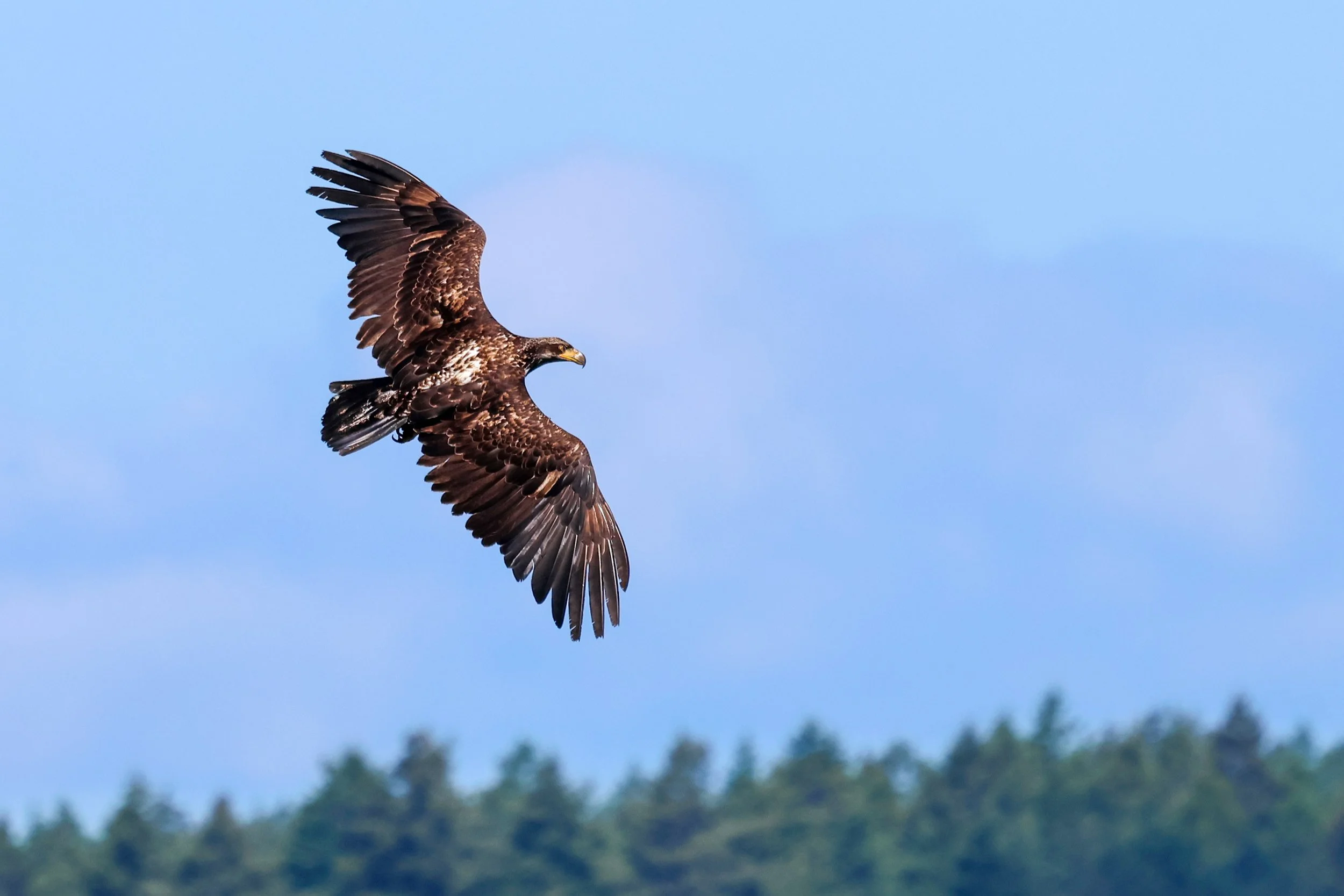
Bald Eagles
Rhinoceros Auklets, Pigeon Guillemots, Marbled Murrelets, Scooters, Pelagic Cormorants, Pacific Loons, Red-Necked Phalaropes, Gulls
124 Nautical Miles
May 17, 2026 | 10 AM Full Day Whale Watch
New territory unlocked for the Island Explorer 5 on today's epic Full Day tour! Our search for whales took us INTO Hood Canal, where we spent some quality time with the T65As (minus A3 & A5) and the T64Bs (minus T64B2). We also had the absolute thrill of sighting a new little orca calf traveling with members of the West Coast Bigg's population! Let's start the story from the beginning...
The storm from yesterday had died down, and the sunniest skies greeted us as we arrived at the marina ready for a full day of adventure and exploration. The currents were ripping in Guemes Channel and Rosario Strait. The ebbing tide was in full swing, and forecasted to be a -3.6, one of the most extreme of the year. As we approached Lopez Island, we saw a growing bird mill feeding on herring (we think) amongst the currents. It wasn't your average bird mill, five bald eagles were dive bombing the surface gathering of alcids, gulls and cormorants! We weren't sure if they were going for the smaller birds or the school of forage fish until we witnessed the eagles swoop down and emerge with talons full of fish. It was truly such an intense display of aerial prowess.
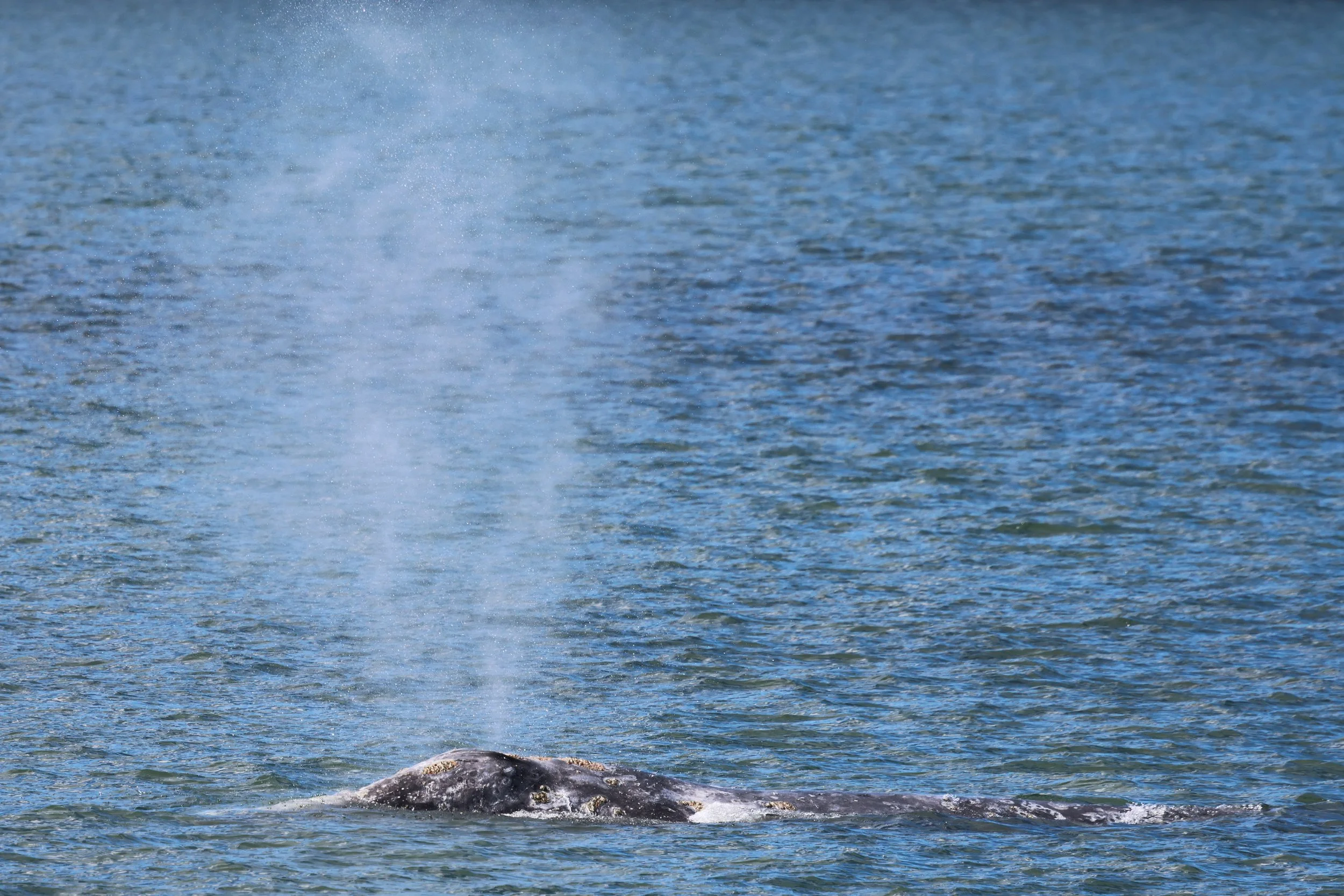
Just a bit further into Shoal Bight, we saw a plume of moisture rise into the air. A gray whale blow! This friendly whale was actively feeding, as evident by the plumes of sediment trailing behind them with each new surfacing. A flock of surf scooters drifted nearby, a species known to forage alongside gray whales as these ecosystem engineers disturb the benthos in their quest for invertebrates. We waved goodbye to this visiting mysticete and continued south on our search for cetaceans.
The Strait of Juan de Fuca still had some residual swell rolling in from yesterday's weather event. But the skies were clear, and the freshly dusted snow-capped peaks of the Olympics were beckoning us south. We slowed at Smith to search for birds. Bark-brown marbled murrelets were coupled up near the flowing bull kelp. Pigeon guillemots and rhinoceros auklets were diving for fish, while a small flock of cormorants perched atop a large rock west of Smith that is only exposed at the lowest of tides. As we neared the southern edge of the bank, we sighted the needle in the haystack we'd been hoping for: puffins! And not just any puffins, a handsome tufted puffin was swimming beside his presumed mate, a gorgeous horned puffin!!! This budding romance rocked the birding world last summer, and we were thrilled to see the couple back at Smith for another season of Love Island.
We continued our search at Eastern Bank then down towards Partridge and Admiralty Inlet. By this time, we'd heard word of orcas sighted down south in Puget Sound, but their direction of travel had us a bit nervous. The report was of a group of Bigg's heading for the mouth of Hood Canal, a branch of the sound that is spanned by a floating bridge. The Island Explorer 5 had never passed beneath this bridge in her eight-years exploring the waters of the Salish Sea, so the big question was: "Will she fit?" Captain Tyson was working some numbers up in the helm as we weighed our options, having to account for the tides, the height of our vessel and the slope of the eastern side of the bridge that would allow for passage beneath. As we neared the bridge we got word that the whales had indeed passed through to the other side... Time to think short thoughts. With the utmost care our skilled captain guided us under the bridge while our crew was stationed on the roof to visually ensure our calculations were correct, and... She fits! At least, she fits at lower tides, but fortunately the tidal cycle was working in our favor today. A first for the boat and a first for the crew, we couldn't be more excited!
We caught up with the seven Bigg's killer whales working their way south down the western side of the canal. A trio that included T64B, T64B1A and T65A6 were tightly grouped, while T64B1, T65A, T65A2 and T65A4 were spread across the canal. They seemed to be in hunting mode, spreading out to better their odds of finding seals, harbor porpoises or sea lions in these sheltered waters. We waved farewell to them as they neared Thorndyke Bay, making our turn to the north to once again cross beneath the hood canal bridge as the flood tide filled this inland basin.
Our journey north was dotted with fun Steller sea lion encounters. We slowed for two young Stellers playing in the traffic lanes between Port Townsend and Coupeville. They appeared to have food that attracted several gulls to their location, but we were never able to confirm what it is they had caught. They peeked their heads above the water to investigate us as we were investigating them, then continued their playful behavior beneath the waves. We also slowed for several larger Stellers hauled out atop a Partridge Bank navigational marker. They were rolling with the growing swell coming in from the west, at times disappearing in the trough. Some Pelagic cormorants were perched atop the marker above them, riding out the swell with apparent nonchalance.
We hadn't gone far when we felt the boat slow again. That was odd, I wondered what Captains Tyson and Amy had found. ORCAS!!!
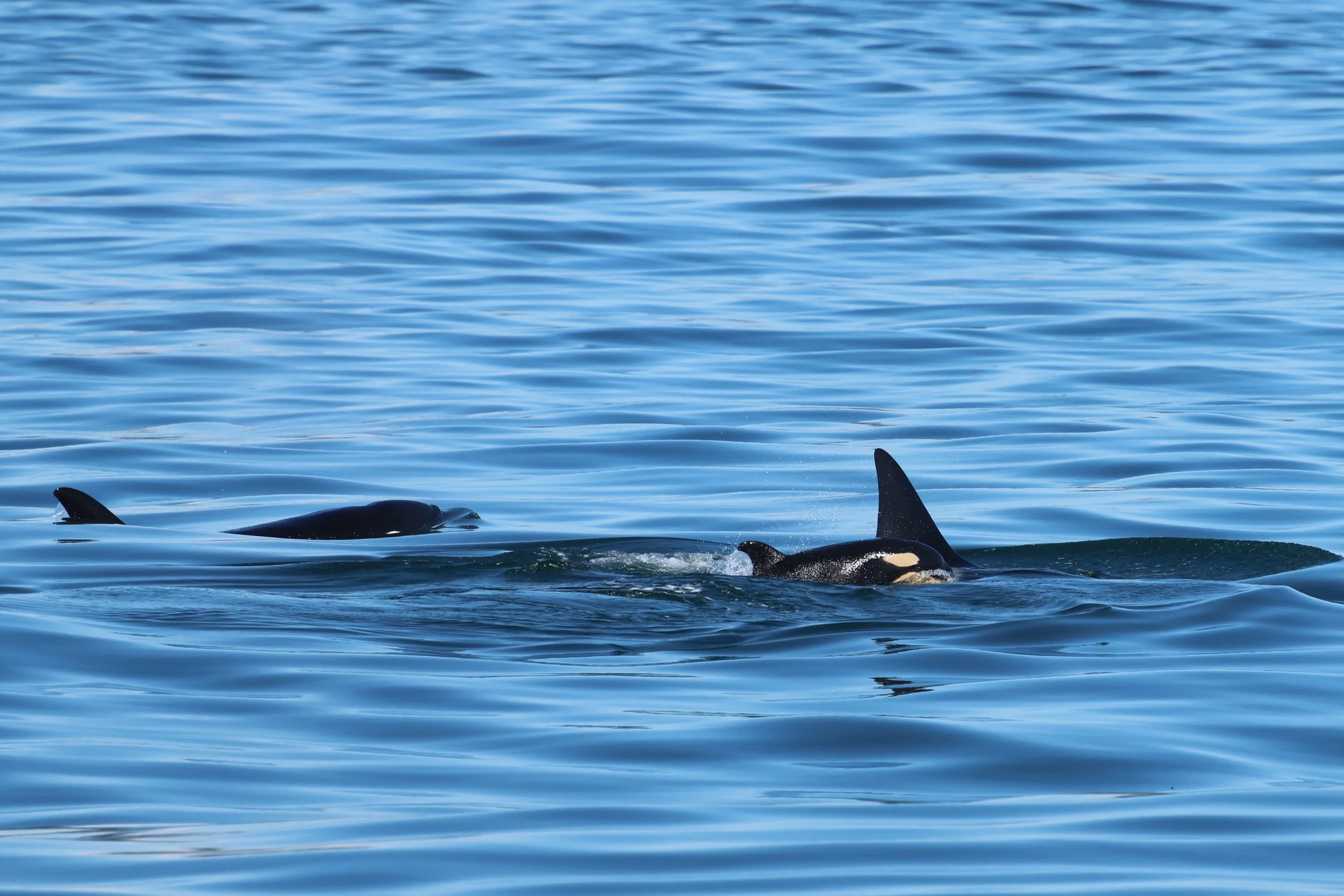
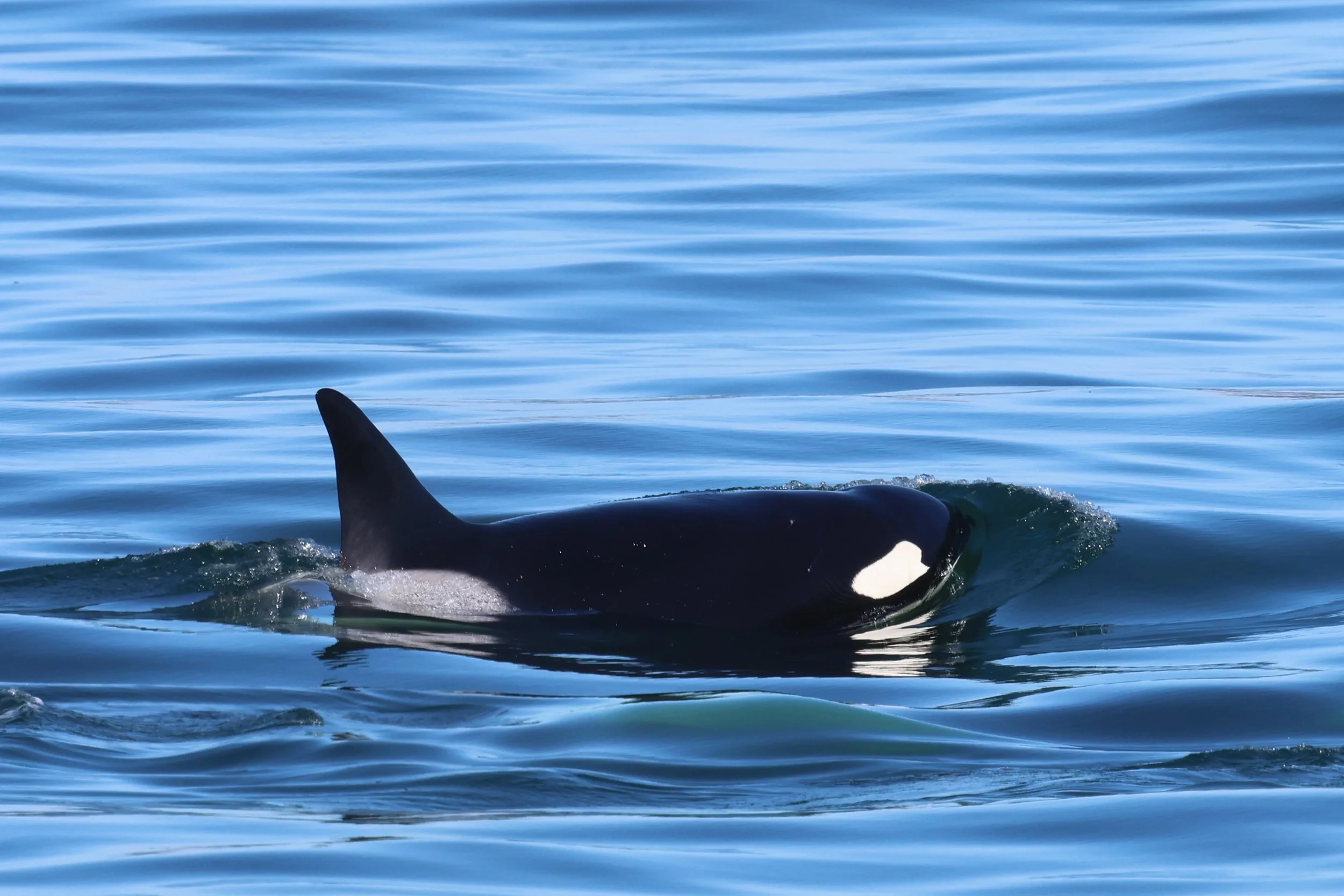
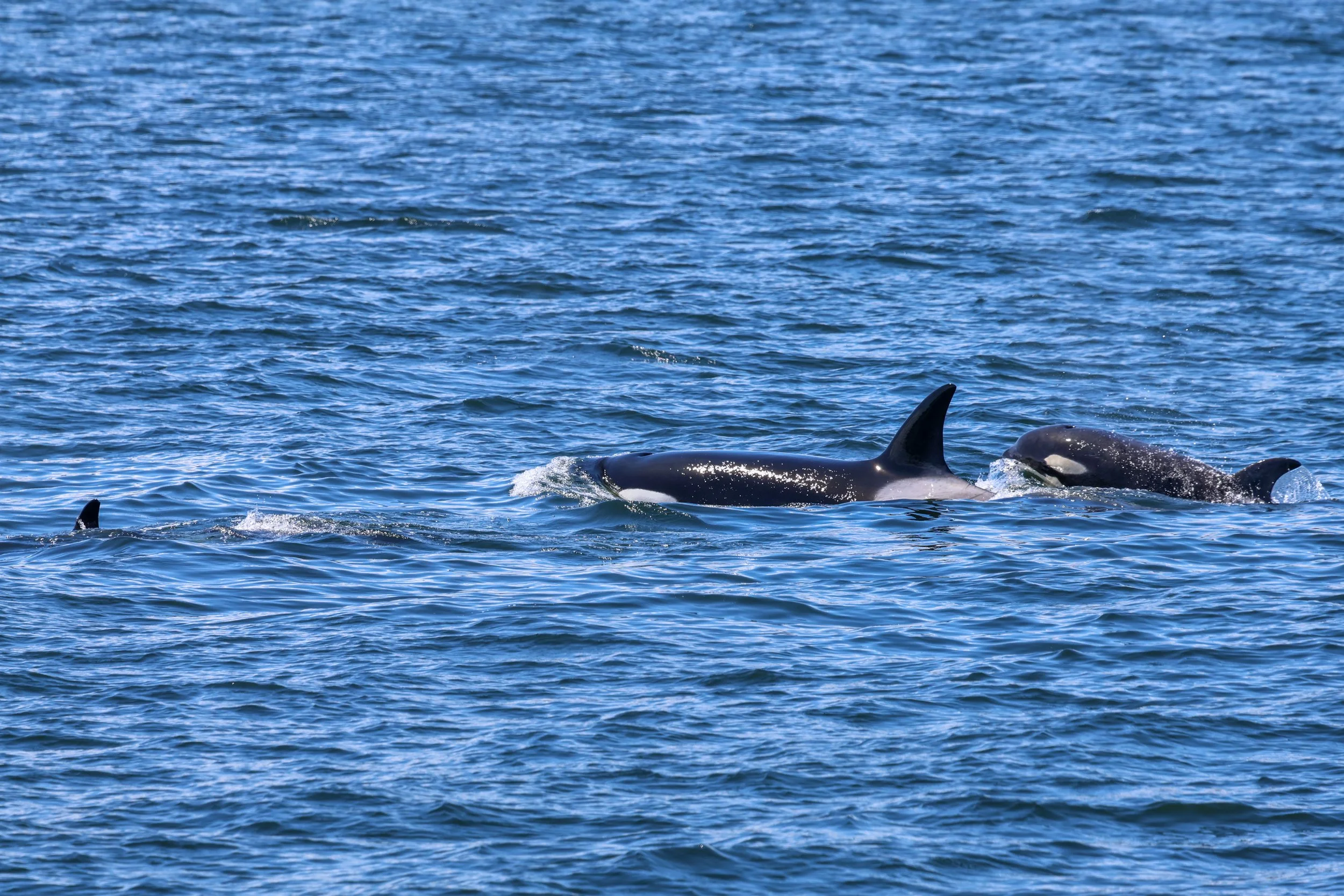
Amy had sighted inky dorsal fins on the horizon, a surprise orca encounter! I was excited to get photos of the group and puzzle out who exactly we'd crossed paths with, as very few orcas had been sighted in the heart of the Salish Sea today. As we worked our way into the parallel viewing position, the excitement grew. There was a very young calf amidst the group of five, and it did not look like any of the known calves documented so far this year. Could this be a new baby? We determined that the group included T124A2 (Elkugu), T124A2A (Agafia), T124A2B (Litton), T124A1(Bonapartes). Throughout our 30 minute encounter, the little calf was consistently traveling next to T124A1. When a new calf is sighted, researchers will typically wait until several encounters with the calf are documented before they assign a mother. The female the calf is most often sighted traveling beside is most likely the one who birthed the calf. However, sometimes there can be doubt surrounding who the biological mother might be, and just such an incident happened two years ago with Bonapartes and another of her little sisters. In spring of 2024, a young calf was seen traveling consistently with T124A1 and thus assigned the ID T124A1A (later nicknamed Sabine). After a month or so, the calf was consistently sighted with T124A4 (Sabio). Was this a case of mistaken parentage? Or was Sabine adopted by her aunt Sabio? We may never know. But we were very excited, and curious, to see Bonapartes traveling with another little calf, and even more so to see her traveling with another of her younger sisters while with a new calf.
Anytime a new calf is sighted, it is cause for celebration, and the West Coast Bigg's population has had much to celebrate over the past decade. On that truly high note, we continued our cruise home. What a memorable day for Island Adventures, our crew and our guests!
Our next Full Day excursion is set for July 15th! Want even more time on the water? Our first Extended Range trip, a 10-12 hour adventure, is set for the summer solstice (June 21st)! Hope to see you there.
- Sam
Interested in experiencing our tours?
Island Adventures Whale Watching provides the best opportunity to explore the Salish Sea and the wildlife beneath the waves.
If you’ve been on other tours, you’ll appreciate the Island Adventures difference.